
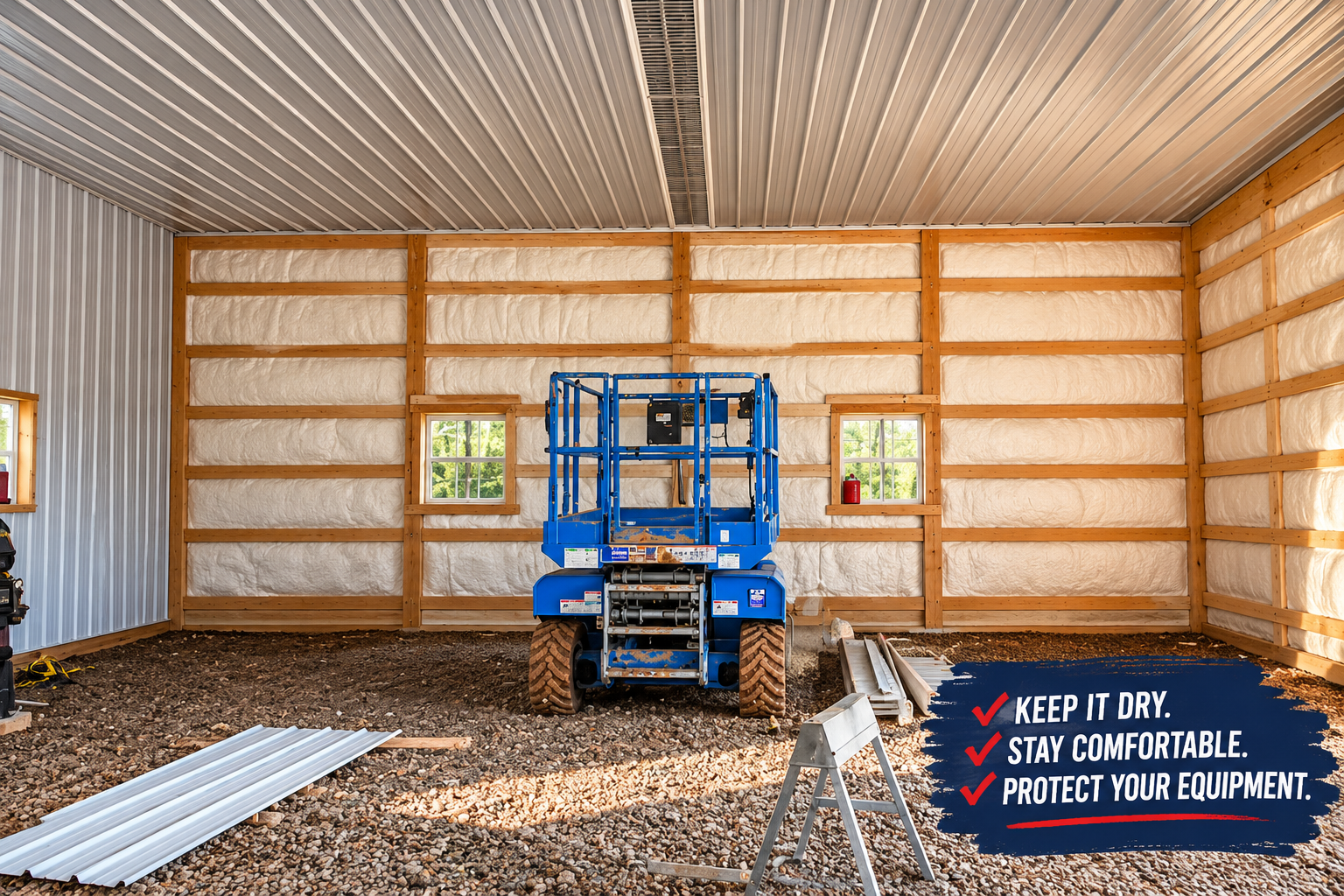
If you’ve ever walked into a metal building and noticed water droplets on the underside of the roof, damp surfaces, or a musty smell, you may be dealing with condensation in a pole barn. While a little moisture may not seem like a major concern, ongoing condensation can create problems for your building, equipment, stored belongings, and overall comfort.
Fortunately, proper insulation, ventilation, and moisture control can help keep your pole barn drier year-round.
Why Does Condensation Form in a Pole Barn?
Condensation occurs when warm, moisture-filled air comes into contact with a colder surface, such as a metal roof or wall panel. As the air cools, moisture can collect as water droplets.
The amount of moisture in a pole barn can also be affected by how the building is used. Livestock, wet vehicles and equipment, damp soil, and even heating a workshop during the winter can introduce additional moisture into the air.
Insulation Can Help Control Condensation
A properly insulated pole barn can reduce the temperature difference between the interior air and exterior metal surfaces, helping limit condensation while making the building more comfortable.
The right insulation depends on how you plan to use your building. A garage or equipment building may have different requirements than a heated workshop, horse barn, or year-round commercial space. Learn more in our guide to [choosing the best insulation for a pole barn].
Don’t Forget About Pole Barn Ventilation
Insulation alone isn’t always enough. Good pole barn ventilation allows humid air to escape while encouraging fresh air to circulate through the building.
Ridge vents, soffit vents, cupolas, fans, windows, and other ventilation options can all contribute to better airflow. This is particularly important in agricultural buildings where animals can generate significant heat and moisture.
Our guide to [cooling your pole barn with ventilation and insulation] offers additional tips for improving airflow and year-round comfort.
What About a Pole Barn Vapor Barrier?
Depending on the building design and intended use, a pole barn vapor barrier or other condensation-control system may be recommended. These materials help reduce the movement of moisture into areas where it can collect on cold surfaces. The correct solution should be determined as part of the building’s overall insulation and ventilation strategy.
How to Stop Condensation in a Pole Barn
If you’re wondering how to stop condensation in a pole barn, there isn’t one solution that works for every building. Insulation, ventilation, drainage, vapor control, and the way the building will be used all need to work together.
Planning these details before construction can help prevent moisture issues later.
At CHA Pole Barns, we build custom pole barns designed around how our customers actually plan to use them. From garages and workshops to agricultural and equestrian buildings, we’ll help you consider the details that can make your new building more functional and comfortable for years to come.
Planning a pole barn? Contact CHA Pole Barns to discuss your project and start designing a building that works for you.
